Many small salon owners assume a diode laser hair removal machine is only for large clinics with large budgets. In practice, compact diode platforms are the fastest-growing segment we ship — and most of the mistakes we see come from buying the wrong configuration, not the wrong machine.
This is the checklist we walk small salon owners through before they place an order: the six points that decide whether the machine earns its money in the first three months.
1. Wavelength count: three is the practical minimum
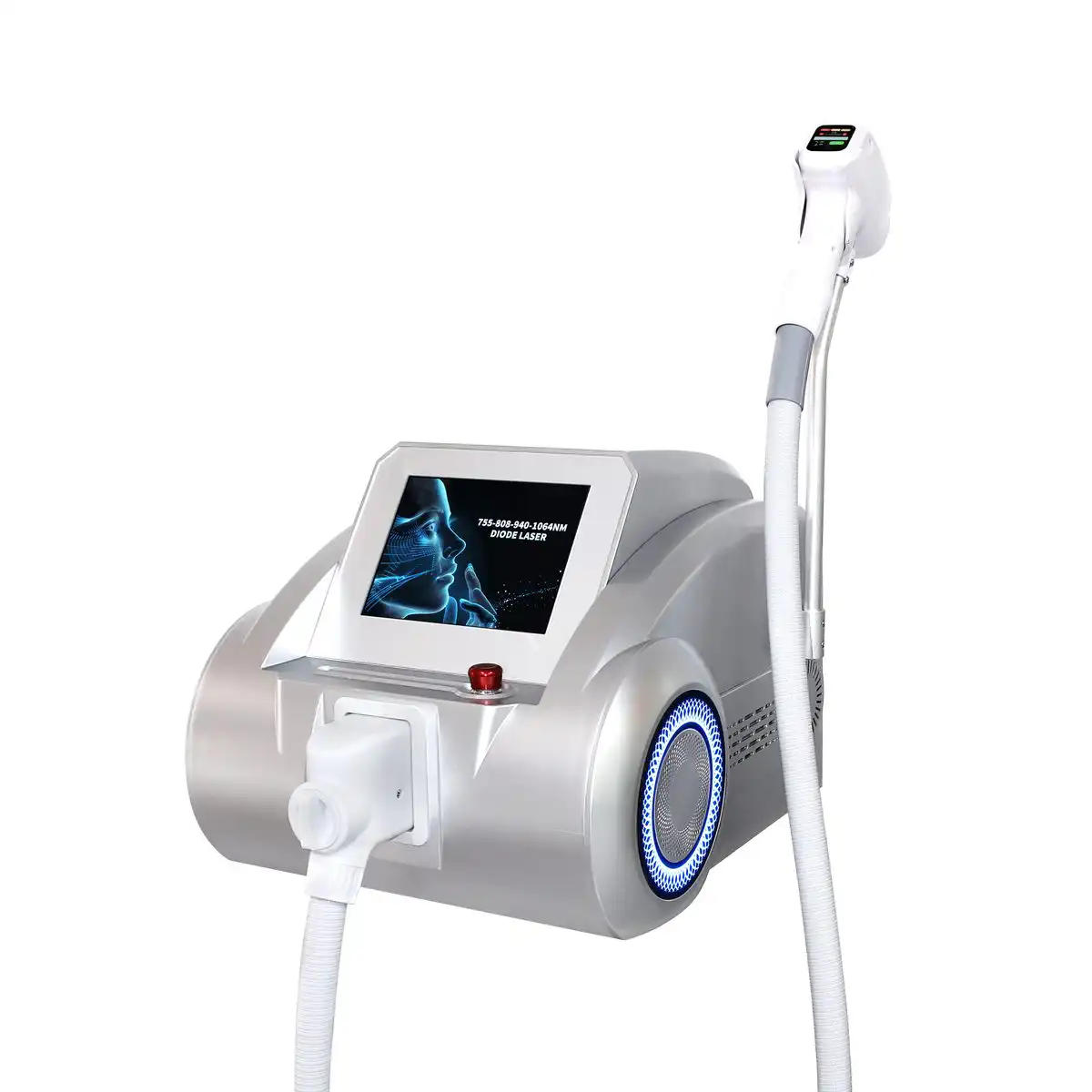
Most professional diode platforms combine 755nm, 808nm and 1064nm in a single handpiece. Those three wavelengths are not a marketing list — each one solves a different client:
- 755nm — thinner, lighter hair; what clients with fine facial or arm hair ask for.
- 808nm — the body workhorse: legs, underarms, bikini, back.
- 1064nm — deeper penetration, and the safest option on darker skin tones, which is why a mixed client base needs it.
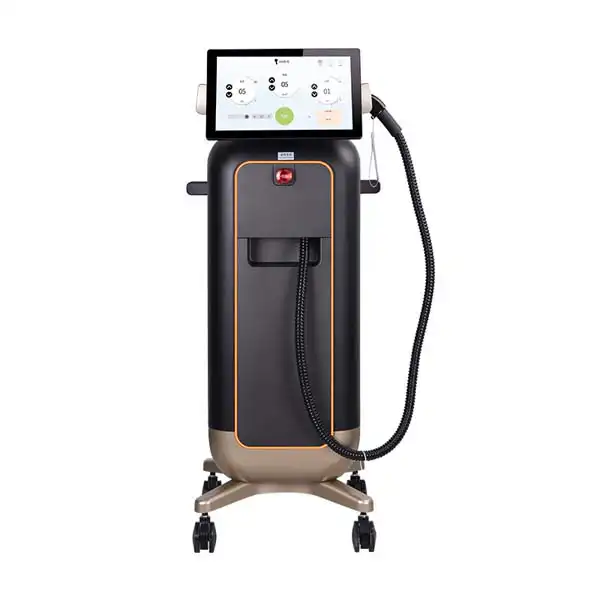
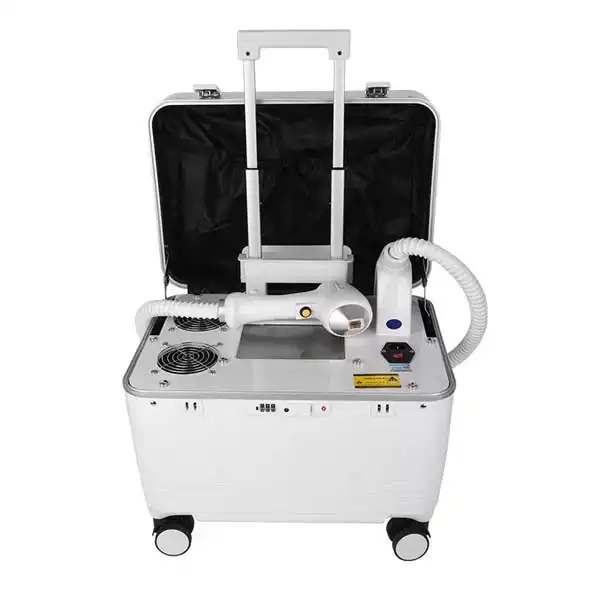
A single-wavelength 808nm machine is cheaper, but it narrows the clients you can accept. If your salon takes walk-ins from a mixed neighborhood, the three-wavelength configuration pays for itself in the first season. Both of our diode platforms — the portable 3-wavelength pico + diode unit and the floor-standing 1200W model —
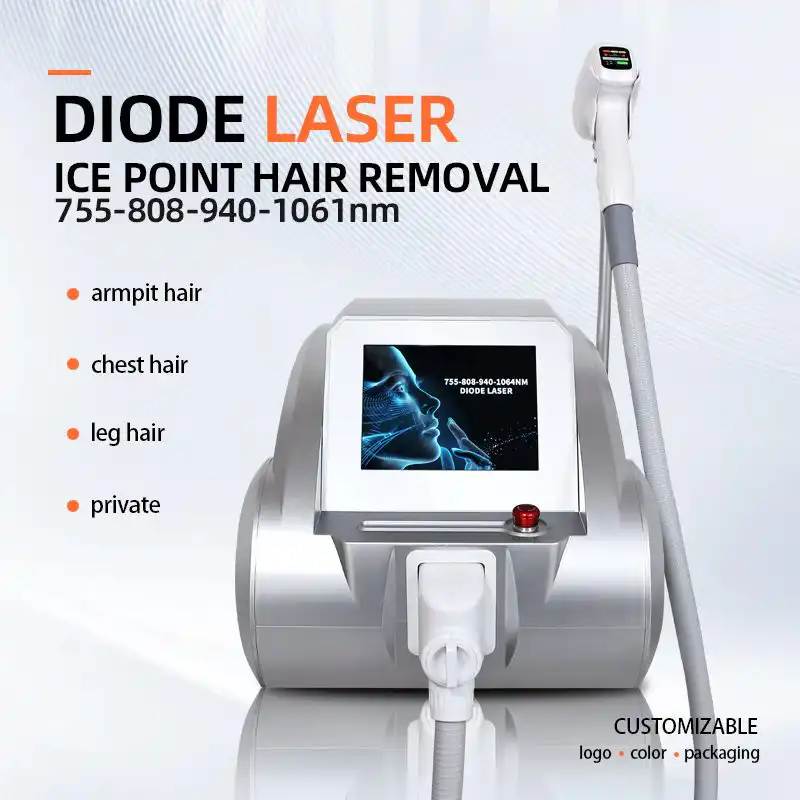
run 755/808/1064nm.
2. Spot size and treatment speed
Spot size decides how many appointments you can fit into a day. A wider spot covers legs, backs and thighs quickly, which matters in a small salon where the same therapist also does facials and nails. A smaller spot is better for detail work such as the bikini line and upper lip.
Ask for the exact spot size in millimetres before you order, and ask the supplier to quote treatment time for one full leg and one full back. Those two numbers tell you more about your daily capacity than the machine’s peak power does.
3. Cooling: the part clients judge you on
Clients judge a laser by pain, and pain decides whether they finish the course you sold. Look for ice-contact (sapphire) cooling built into the handpiece — not just fans in the chassis. Contact cooling keeps the skin interface cold at the moment of the pulse, so you can work at the fluence the treatment actually needs instead of backing off because the client flinches.
4. Power, voltage and the room you already have
Small salons usually run on standard wall power, and rewiring a treatment room is an expense nobody budgets for. Our diode units run on AC 110–230V ±10%, so they work from a normal outlet in most markets without an electrician visit.
Physical footprint matters just as much as the electrics:
| Configuration | Who it fits | What to plan for |
|---|---|---|
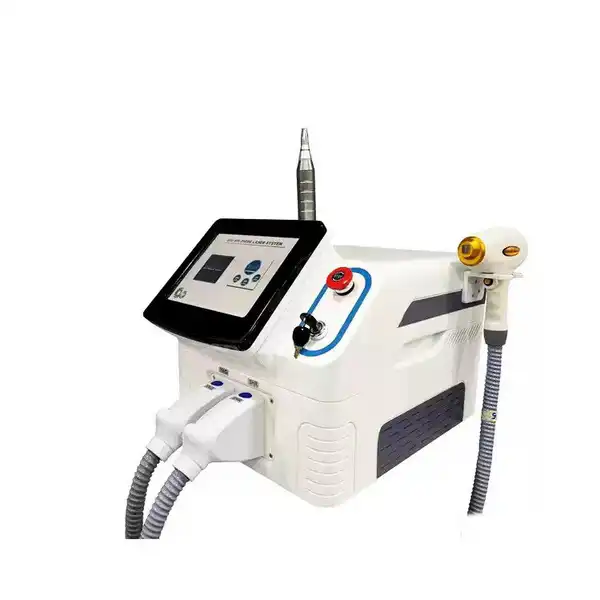
| Portable desktop unit (around 12 kg) | One-room salons, mobile therapists, second treatment room | A stable trolley or counter, plus a dedicated outlet |
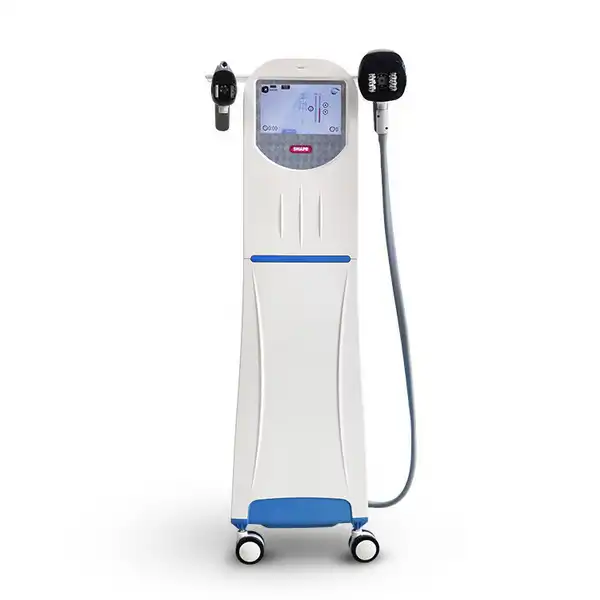
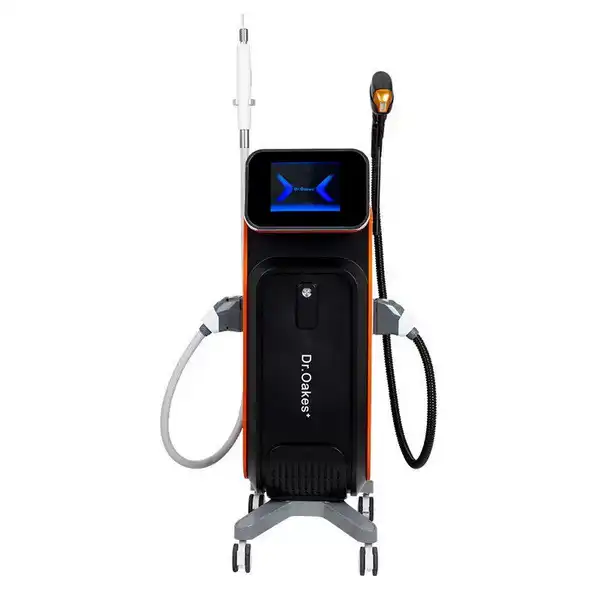
| Floor-standing tower (around 59 kg, 15-inch screen) | Salons running laser several days a week | A fixed position with castors, and a room where the screen is readable from the bed |
If laser will be one service among many, the portable unit is usually the better buy. If laser becomes your main revenue line, the tower’s larger cooling system and bigger screen earn their space.
5. Training and after-sales support
A laser is only as good as the person holding the handpiece. Ask three questions before you pay:
- Is operation training included — video, a live remote session, or on-site?
- Who answers when the machine throws an error at 6pm on a Saturday?
- How are spare handpieces and wear parts supplied, and how fast do they arrive?
We include video training and remote commissioning with every unit, plus ongoing technical support. Whole machines carry a 12-month warranty; handpieces and consumables follow the accessories policy, so put the spare-part terms in writing before you order.
6. Documents, shipping and customs
Import paperwork is where first-time buyers lose the most time. Before you order, confirm:
- CE documentation and, for selected models, registration files you can use locally
- Our associated factory is certified under ISO 13485 — ask for the certificate and check that the name on it matches the manufacturer on your invoice
- Packing dimensions and gross weight, so you can price freight before you commit
- Lead time and shipping method: production plus air freight (fast, higher cost) or sea freight (slower, cheaper per unit)
For the full walkthrough of documents, duties and freight options, read our beauty machine shipping guide. If you are still comparing suppliers, our manufacturer verification checklist lists exactly what to request from each one.
The buying order that saves the most money
- Decide the client mix you will actually treat — skin tones and hair types. This sets the wavelengths.
- Decide your weekly laser capacity. This sets spot size, and portable versus tower.
- Confirm power and room layout — before comparing models, not after.
- Only then compare quotations line by line. A cheap quote usually drops cooling, spare handpieces or training: the three things that decide whether the machine is usable in week one. Our guide to reading a beauty machine quotation shows what those line items should look like.
What we would recommend for a first laser
For a salon adding its first laser service, we usually suggest a portable three-wavelength unit and a written training plan for one therapist — not the biggest machine in the catalogue. Capacity can be added later with a second handpiece or a second room; an idle tower cannot be un-bought.
Send us your treatment list and room size and we will tell you which configuration fits: see the portable 755/808/1064nm diode platform or the floor-standing 1200W system.
FAQ
Is diode laser hair removal safe for darker skin tones?
The 1064nm wavelength is the safest of the three for deeper skin tones, which is why multi-wavelength machines are the standard choice for salons with a mixed client base. Patch tests and correct fluence settings still apply to every client.
How many treatment rooms do I need to start?
One is enough. A diode machine, a trolley and a dedicated power outlet are the basics; a second room only makes sense once your booking calendar is full.
What is the minimum order?
The MOQ depends on the model, the level of customization and your project requirements. For selected standard salon units we can offer reduced starter quantities — ask us for the MOQ of your project.
Do I need a medical licence to operate a diode laser in a salon?
Rules differ by country and, in some markets, by state or province. Check who is permitted to operate energy-based devices locally before you buy — we supply the product documentation clinics and salons need for their applications.