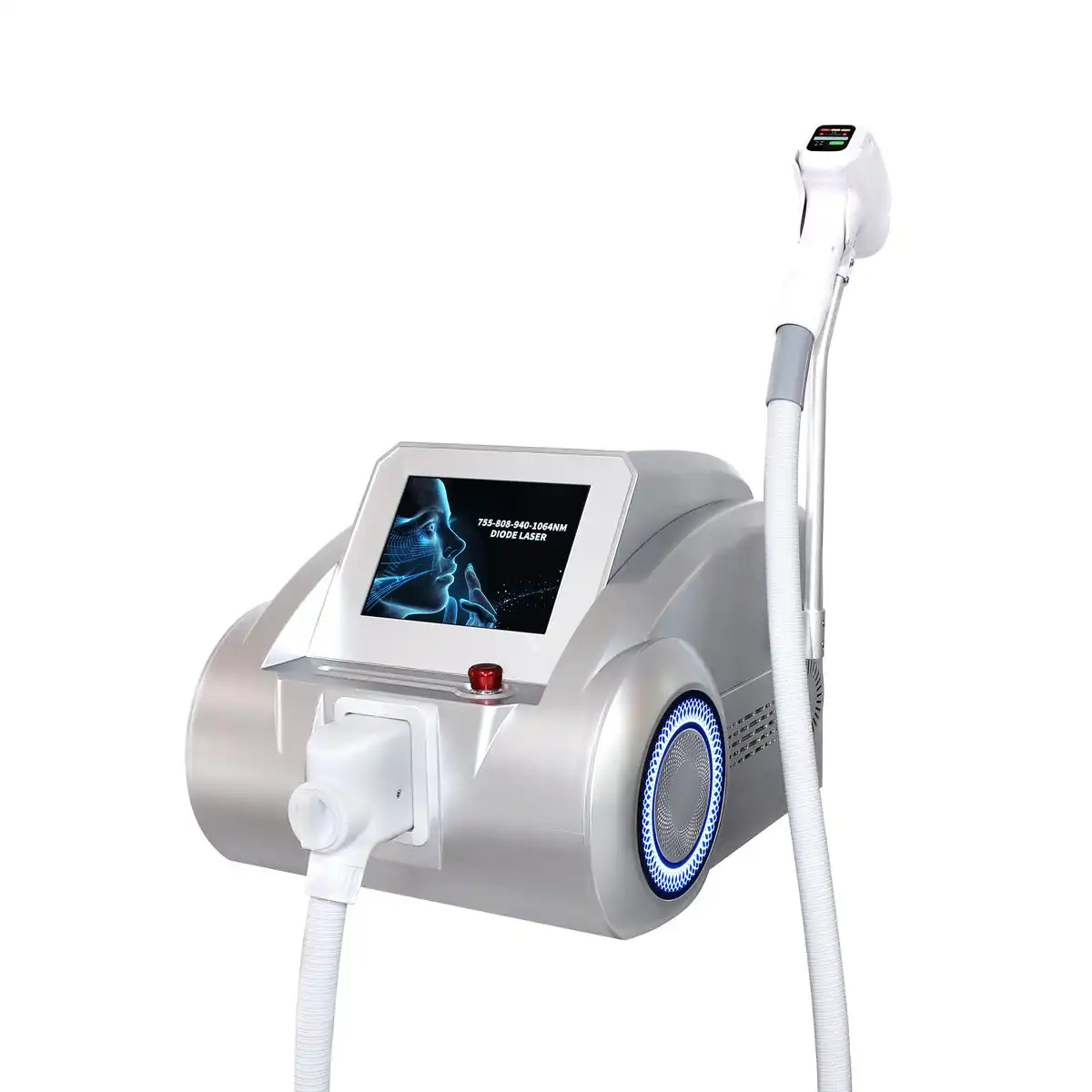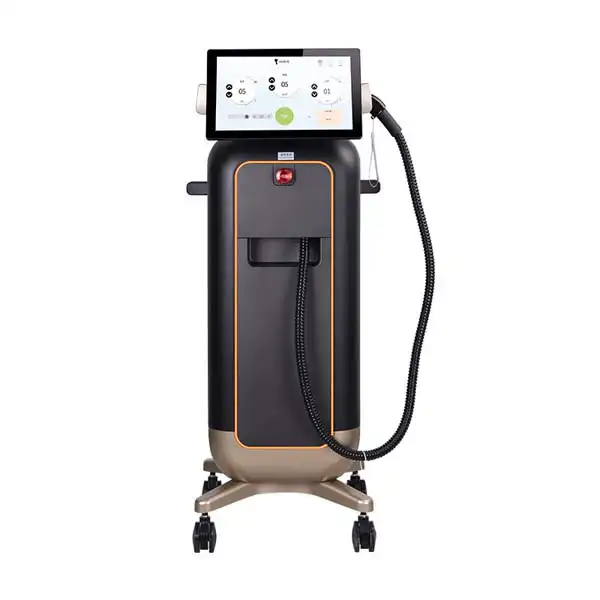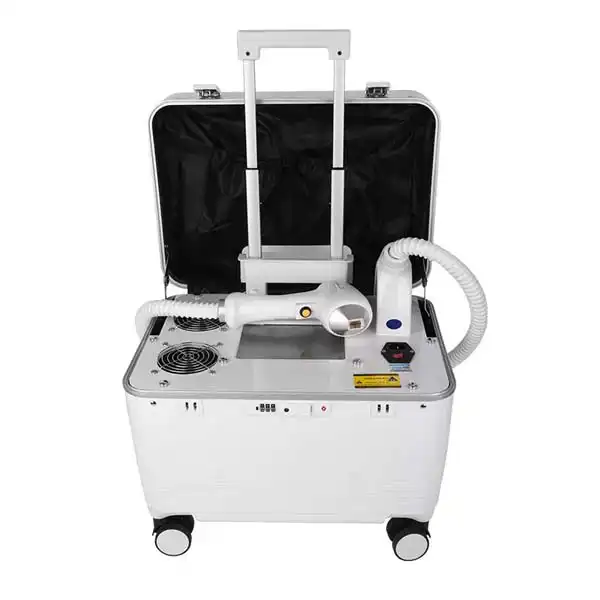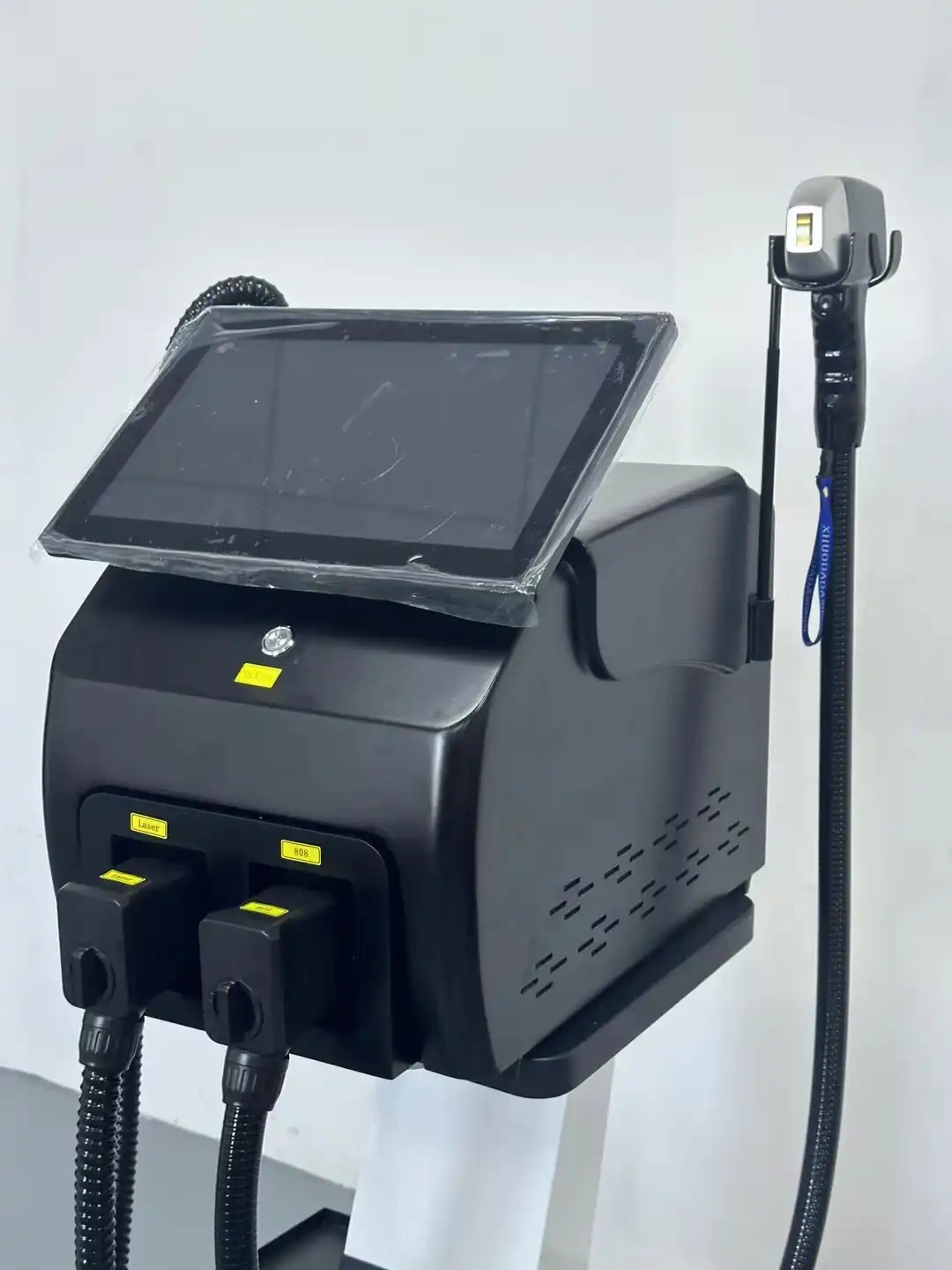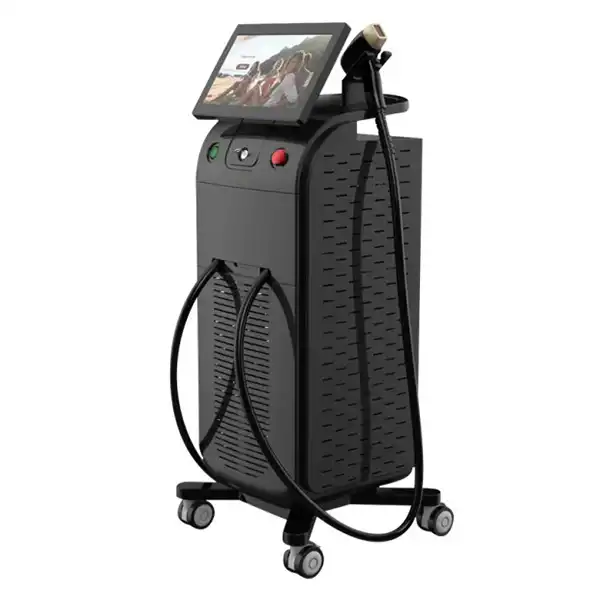
If you are a salon chain owner, beauty equipment distributor, or clinic procurement manager searching for “diode laser hair removal machine wholesale price,” you already know that quotes from different suppliers can vary by 300% or more. A machine that one factory quotes at 4,500 from another — and both claim to be “808nm diode laser.”
This guide breaks down exactly what drives that price gap, what configurations matter, and how to verify you are buying from a legitimate manufacturer rather than a trading company markup. By the end, you will have a price reference table, a supplier verification checklist, and ready-to-use inquiry templates.
Understanding 808nm diode pricing is easier with market context — our beauty machine wholesale price and OEM guide consolidates real wholesale price ranges, configuration trade-offs, and shipping considerations for importers.
This page drills into the 808nm price tiers; our diode laser machine wholesale prices guide covers the rest of the family — 755nm, 1064nm, three-wavelength and combination builds.
Why 808nm Is the Gold Standard Wavelength for Hair Removal
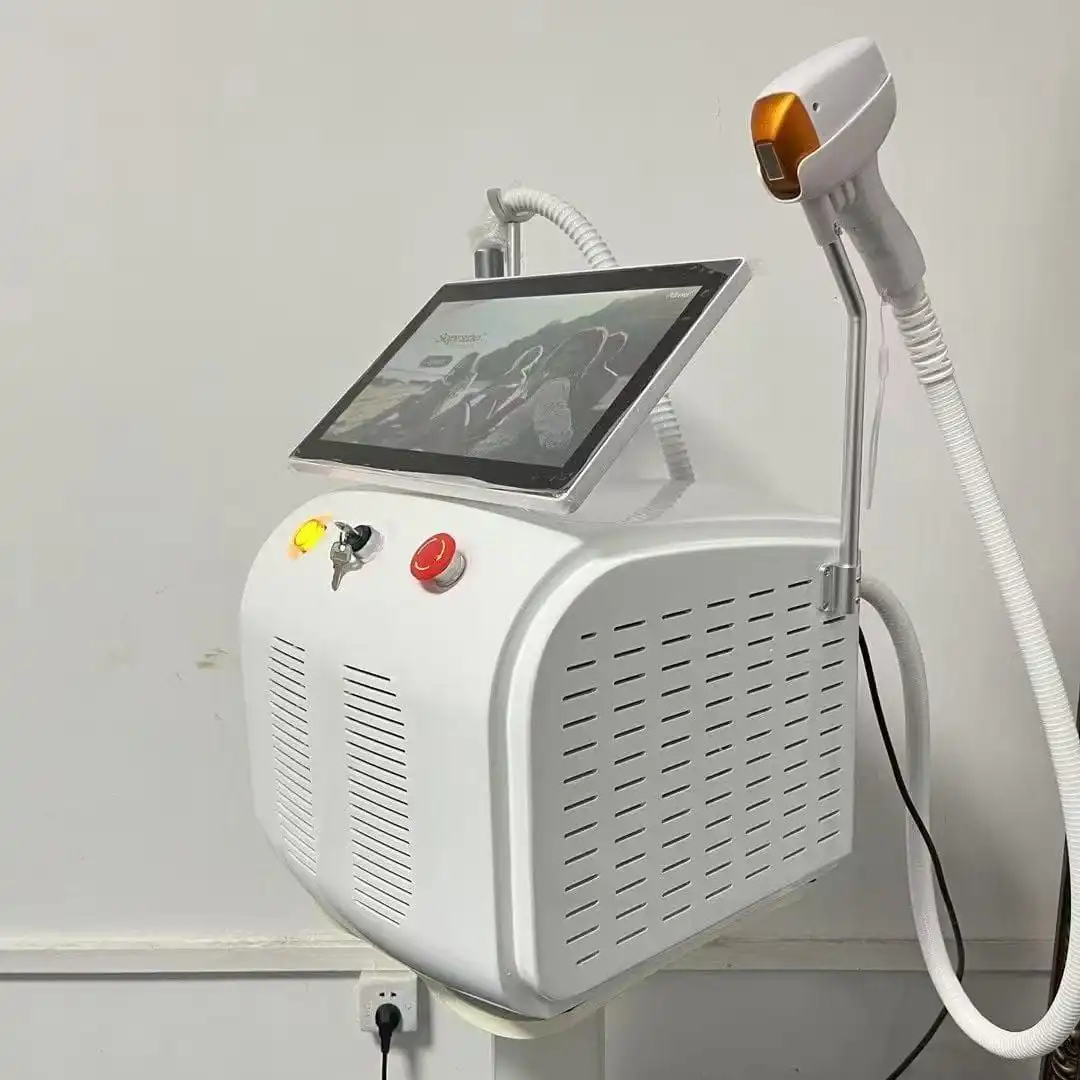
The 808nm diode laser has become the industry benchmark for professional hair removal. To understand why, you need to compare it against the other major wavelengths used in the field.
 808nm vs 755nm (Alexandrite Laser)
The 755nm alexandrite laser was the go-to for hair removal in the 2000s. It offers strong melanin absorption, making it effective for fair skin types (I–III). However, alexandrite lasers come with significant drawbacks for commercial use:
- Higher cost: Alexandrite crystal rods are expensive to produce, pushing machine prices to 15,000–40,000.
- Limited skin type range: Too aggressive for darker skin (IV–VI), causing burn risks.
- Maintenance: Alexandrite rods degrade faster than diode bars.
The 808nm diode hits a sweet spot — effective melanin absorption with deeper penetration (up to 5mm into the dermis), making it safe across a broader range of skin types (I–V). For a wholesale buyer, this means one machine can serve more clients.
808nm vs 810nm: Same Technology, Different Naming
Here is a common point of confusion: 808nm and 810nm are essentially the same technology. The diode laser bars used in these machines typically emit light in the 800–810nm range. Some manufacturers label their products “808nm” while others use “810nm” — the actual wavelength output varies by only ±2nm, which is within manufacturing tolerance.
When comparing prices, treat “808nm diode laser” and “810nm diode laser” as the same product category. Do not let a supplier convince you that 810nm is a “newer” or “better” technology to justify a higher price.
808nm vs 1064nm (Nd:YAG Laser)
The 1064nm Nd:YAG laser is designed for dark skin (types V–VI) because its longer wavelength bypasses epidermal melanin and targets the hair follicle directly. While effective for dark skin, it is less efficient for lighter skin types compared to 808nm.
Most modern professional machines combine both wavelengths. A popular configuration is the three-wavelength diode laser (755nm + 808nm + 1064nm), which covers all skin types in a single handpiece. This brings us to the most important factor in wholesale pricing: configuration.
Single-Wavelength vs Multi-Wavelength Machines
| Type | Wavelengths | Best For | Wholesale Price Range |
|---|---|---|---|
| Single 808nm | 808nm only | Skin types I–V, high-volume clinics | 800–2,500 |
| Dual wavelength | 808nm + 1064nm | All skin types, moderate versatility | 1,200–3,500 |
| Three wavelength | 755 + 808 + 1064nm | All skin types, maximum versatility | 1,500–5,000 |
| Four wavelength | 755 + 808 + 940 + 1064nm | Premium positioning, marketing advantage | 2,000–6,500 |
Note: Prices above reflect factory-direct wholesale quotes from Chinese manufacturers. European and American brands typically charge 3–5x more for equivalent configurations.
New vs Refurbished Machines: Price Ranges and What You Get
Brand New Machine Price Tiers
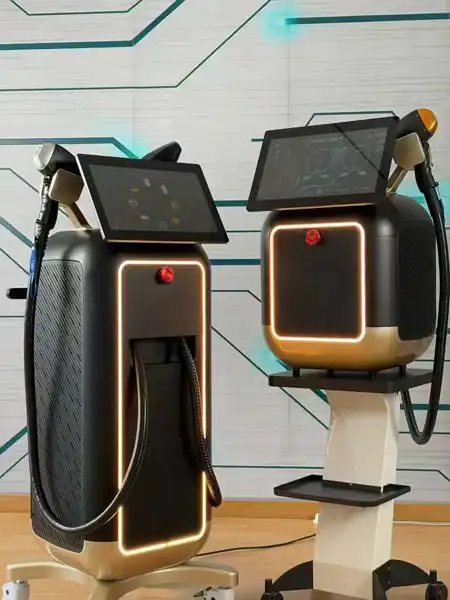
When sourcing directly from manufacturers in China, new 808nm diode laser machines fall into three tiers:
Budget Tier (800–1,500)
- Single 808nm wavelength
- 600W–1200W power output
- Standard TEC + sapphire cooling
- Domestic (Chinese) laser bars
- Basic software with limited skin-type presets
- Suitable for: startups, small salons testing the market
Mid-Range Tier (1,500–3,000)
- Three-wavelength (755+808+1064nm) option available
- 1200W–1800W power output
- Dual cooling (TEC + water + sapphire)
- Imported laser bars (German Coherent or similar)
- Multi-language software with skin-type auto-detection
- Suitable for: established salons, distributors reselling to clinics
Premium Tier (3,000–6,500)
- Three or four wavelength configurations
- 1800W–3000W power output
- Advanced cooling (TEC + water + sapphire + air)
- Imported laser bars with longer lifespan (50M+ shots)
- Customizable UI, OEM branding options
- FDA/CE documentation included
- Suitable for: clinic chains, medical spas, brand owners
Refurbished Machine Considerations
Refurbished or used diode laser machines can save 40–60% off new prices, but they carry risks:
- Laser bar lifespan: Diode bars degrade over time. A machine with 20 million shots already fired may need a 400–800 bar replacement within months.
- Cooling system wear: Sapphire crystals and TEC modules degrade, increasing burn risk.
- No warranty: Most refurbished units from third-party sellers come with no after-sales support.
Recommendation: Only buy refurbished from the original manufacturer (not third-party resellers) with a written warranty on laser bars and cooling components.
5 Key Configurations That Affect Wholesale Price
Understanding these five factors will help you decode any supplier’s quote:
1. Number of Wavelengths
Single 808nm is the most affordable. Each additional wavelength (755nm, 1064nm, 940nm) adds 200–600 to the factory price because each requires a separate set of laser bars.
2. Power Output (Wattage)
- 600W: entry-level, slower treatment speed
- 1200W: standard for commercial use
- 1800W: faster treatment, suitable for high-volume clinics
- 3000W: top-tier, enables larger spot sizes and shorter pulse durations
Higher wattage does not always mean better results — it means faster treatment sessions. For a salon seeing 15+ clients per day, 1800W+ is worth the investment.
3. Spot Size
- 10×10mm: standard, slower treatment (60+ minutes for full legs)
- 12×12mm: balanced speed and precision
- 15×15mm: faster coverage (30–40 minutes for full legs)
- 15×50mm (large spot): in-motion technology, fastest treatment
Larger spot sizes cost more because they require higher-quality sapphire crystal and more powerful cooling.
4. Laser Bar Origin
- Chinese domestic bars: $0 additional cost, 10–20 million shot lifespan
- Imported bars (German Coherent, etc.): +300–800, 30–50 million shot lifespan
This is the single biggest hidden cost factor. A supplier quoting 900likelyusesdomesticbars;onequoting2,500 may use imported bars. Always ask: “What brand are the laser bars?”
5. Cooling System Quality
- Basic: TEC (thermoelectric cooling) only — adequate but may cause discomfort
- Standard: TEC + sapphire + water circulation — comfortable for most clients
- Advanced: TEC + sapphire + water + air cooling — zero-downtime, pain-free treatments
The cooling system directly affects client comfort and your salon’s reputation. Cutting corners here is a false economy.
 How to Verify a Manufacturer Before Sending Money
The beauty equipment market has hundreds of “manufacturers” on Alibaba and Made-in-China. Many are trading companies that buy from the same 5–10 real factories and mark up prices 30–100%. Here is how to separate real factories from middlemen.
CE and FDA Certifications
CE Mark (European Conformity):
Required for selling laser equipment in the EU. But not all CE marks are equal:
- CE (Medical Device Directive 93/42/EEC or MDR 2017/745): The real deal — means the machine passed clinical evaluation
- CE (Low Voltage Directive only): Only covers electrical safety, NOT medical device compliance
Ask for the actual CE certificate, not just a CE logo on the website. A real medical CE certificate includes a Notified Body number (4-digit code) you can verify online.
FDA Clearance (US Market):
For the US market, the machine needs FDA 510(k) clearance, not just an FDA registration number. Many Chinese suppliers have FDA “registration” (which just means they paid a fee to list their facility) but no actual 510(k) clearance.
To verify: search the FDA 510(k) database at accessdata.fda.gov/scripts/cdrh/cfdocs/cfpmn/pmn.cfm using the supplier’s company name.
OEM/ODM Capabilities
If you plan to sell under your own brand, verify the supplier offers:
- OEM (Original Equipment Manufacturing): They manufacture to your specifications (custom color, logo, packaging)
- ODM (Original Design Manufacturing): They can modify the machine design (custom software UI, unique handpiece design)
Ask for photos of previous OEM projects. A real factory will have 10+ examples. A trading company will have none or will send you someone else’s photos.
MOQ (Minimum Order Quantity) and Sample Policy
| Supplier Type | Typical MOQ | Sample Price | Sample Lead Time |
|---|---|---|---|
| Real factory | 1–5 units | Factory price + shipping | 5–10 days |
| Trading company | 5–10 units | 20–40% markup | 15–25 days |
| Drop-shipper | 1 unit | 50–100% markup | 20–30 days |
A legitimate manufacturer will sell you a single sample unit at near-wholesale price. If a “manufacturer” insists on a 10-unit minimum for your first order or charges retail price for a sample, they are likely a trading company.
Factory Audit Checklist
Before placing a large order (10+ units), request:
- Business license — verify the company name and registered capital
- Factory photos/video tour — look for actual production lines, not just showrooms
- Laser bar purchase records — a real factory can show invoices from Coherent, Focuslight, or other bar suppliers
- Export history — ask which countries they currently export to and request a customs declaration sample (redacted)
- After-sales policy — warranty period (should be 12–24 months), replacement parts availability, technical support response time
Inquiry Templates: What to Ask Suppliers
Save time and get better quotes by using structured inquiry templates. Copy and paste these directly.
Price Quote Request Template
Subject: Wholesale Inquiry — 808nm Diode Laser Hair Removal Machine

Hello,

I am sourcing 808nm diode laser hair removal machines for my business. Please provide a quotation with the following specifications:

1. Wavelength configuration: [single 808nm / three-wavelength 755+808+1064nm]
2. Power output: [1200W / 1800W / 3000W]
3. Spot size: [12x12mm / 15x15mm / 15x50mm]
4. Laser bar brand: [please specify — imported or domestic]
5. Cooling system: [TEC + sapphire + water / full cooling]

Please include in your quote:
- Unit price for sample order (1 unit)
- Wholesale price for 5 units and 10 units
- Shipping cost to [your country/port]
- Lead time for sample and bulk orders
- CE/FDA certificates (please attach)
- Warranty terms and replacement parts policy

Best regards,
[Your name]
[Your company]
Sample Machine Request Template
Subject: Sample Order Request — [Product Model Number]

Hello,

Based on your quotation, I would like to order one sample unit for quality evaluation before placing a bulk order.

Please confirm:
1. Sample price (including shipping to [your address])
2. Whether the sample has the same specifications as bulk production units
3. If OEM branding (logo on machine, custom boot screen) is available on the sample
4. Estimated production and shipping time
5. If the sample cost can be deducted from the first bulk order

If the sample meets our quality standards, we plan to place an initial order of [X] units within [timeframe].

Best regards,
[Your name]
Certification Verification Template
Subject: Certification Verification — Request for Documents

Hello,

Before proceeding with the order, I need to verify your product certifications. Please provide:

1. CE certificate (Medical Device Directive, with Notified Body number)
2. FDA 510(k) clearance letter (if applicable for US market)
3. ISO 13485 certificate (medical device quality management)
4. Test report for laser output stability (from a third-party lab)
5. Laser bar supplier certificate of origin (Coherent, Focuslight, or equivalent)

If any of these documents are not available, please let me know which ones are pending.

Best regards,
[Your name]
Price Reference Table: Are You Getting a Fair Quote?
Use this table to evaluate whether a supplier’s quote is reasonable. Prices are in USD, based on factory-direct wholesale from Chinese manufacturers as of early 2026.
| Configuration | Budget Quote | Fair Quote | Premium Quote | Red Flag (Too High) |
|---|---|---|---|---|
| Single 808nm, 600W, domestic bars | 700–900 | 900–1,200 | 1,200–1,500 | $2,000+ |
| Single 808nm, 1200W, imported bars | $1,200 | 1,500–2,000 | 2,000–2,500 | $3,500+ |
| Three-wavelength, 1200W, domestic bars | 1,300–1,600 | 1,600–2,200 | 2,200–2,800 | $4,000+ |
| Three-wavelength, 1800W, imported bars | $2,000 | 2,500–3,500 | 3,500–5,000 | $7,000+ |
| Three-wavelength, 3000W, imported bars, advanced cooling | $2,800 | 3,500–5,000 | 5,000–6,500 | $10,000+ |
| Four-wavelength, 3000W, premium config | $3,000 | 4,000–5,500 | 5,500–6,500 | $12,000+ |
How to use this table:
- If a quote falls in the “Budget” column, the machine likely uses domestic laser bars and basic cooling. Fine for entry-level use, but expect shorter lifespan.
- “Fair Quote” is what you should aim for when negotiating with a legitimate factory.
- “Premium Quote” includes imported bars, advanced cooling, and full documentation.
- If a quote exceeds the “Red Flag” column, the supplier is either a trading company with heavy markup or a brand charging for marketing rather than hardware.
Red Flags During Negotiation
Watch for these warning signs:
- “Our machine is the same as [famous brand]” — It is not. Famous brands use proprietary technology and charge for it.
- Price changes more than 20% after first quote — The supplier was testing your budget. Walk away.
- Refuses to provide laser bar brand — They are using cheap domestic bars and do not want you to know.
- No physical address or factory photos — Trading company pretending to be a manufacturer.
- Pressures you to pay full amount upfront — Legitimate factories accept 30% deposit + 70% before shipment.
Conclusion: Getting the Best Wholesale Price
The diode laser hair removal machine wholesale price you pay depends on five controllable factors: wavelength count, power output, spot size, laser bar origin, and cooling system. By understanding these configurations and using the price reference table above, you can evaluate any supplier’s quote within minutes.
Your next steps:
- Decide which configuration fits your target market (use the comparison tables in this guide)
- Send the inquiry templates to 3–5 suppliers for competitive quotes
- Verify certifications using the checklist before placing a sample order
- Test the sample thoroughly before committing to a bulk order
Ready to source 808nm diode laser machines from a verified manufacturer? Browse our 808nm diode laser hair removal product line — we offer factory-direct pricing, CE-certified machines, imported laser bar options, and OEM branding for distributors.
For a customized quote based on your specific requirements, contact our sales team or send us the inquiry template above. We respond within 24 hours with transparent pricing and full certification documents.
FAQ
Q: What is the average wholesale price of an 808nm diode laser hair removal machine?
A: Factory-direct prices from Chinese manufacturers range from 800forabasicsingle−wavelengthunitto6,500 for a premium four-wavelength machine with imported laser bars and advanced cooling.
Q: How long do 808nm diode laser bars last?
A: Domestic Chinese bars typically last 10–20 million shots. Imported bars (such as Coherent) last 30–50 million shots. At 20 clients per day, 20 million shots equals approximately 3–4 years of use.
Q: Is 808nm better than 755nm for hair removal?
A: 808nm is more versatile across skin types I–V, while 755nm is most effective for fair skin (I–III). Most modern machines combine both wavelengths for comprehensive coverage.
Q: What is the MOQ for wholesale diode laser machines?
A: Legitimate manufacturers typically have an MOQ of 1–5 units, with sample units available at near-wholesale pricing. If a supplier requires 10+ units minimum, they may be a trading company rather than a factory.
Q: Do I need FDA clearance to import diode laser machines?
A: For personal use, no. For commercial resale in the US, yes — the machine must have FDA 510(k) clearance. Verify this through the FDA database, not just the supplier’s claim.
Sourcing for your salon or distribution business?
Tell us the machine types and target quantity — we reply with factory-direct pricing, lead time and available export documents.